

WORKING SUSTAINABLY – THINKING MOBILE
Modern ways of working have long been more than just a trend. They are changing not only how we work, but also how we use resources. The field of mobility in particular shows how digital working models can contribute to reducing emissions.
Figures that make change visible
902 employees were based at the Rennweg headquarters in Vienna in 2024. Thanks to the established home office agreement, 73,422 working days were spent outside the office. This figure not only stands for flexibility and trust, but also for a noticeable reduction in the burden on the environment.
It's clear that people who travel to the office less also travel less in general. Life and work are merging together. Regularly working from home reduces the number of kilometres travelled and, by extension the traffic and CO₂ emitted on the roads. Apart from the fact that people aren't travelling to the office and back, trips in the local environment increase as people use their local infrastructure more often, with short journeys often undertaken by foot or bike.
Mobility reimagined – local instead of commuting
Those who regularly work from home do not have to commute every day. This not only reduces traffic, but also CO₂ emissions. At the same time, mobility behaviour is changing: journeys in the immediate vicinity are more often made on foot or by bicycle, and local infrastructure is used more intensively. This has a positive effect – not only on the environment, but also on quality of life.
Our contribution to a sustainable working world
As a company, we see it as our responsibility to promote working models that are ecologically and socially sustainable. The option of mobile working is a key component of this. It combines efficiency with environmental awareness and shows how entrepreneurial action can actively contribute to climate protection.
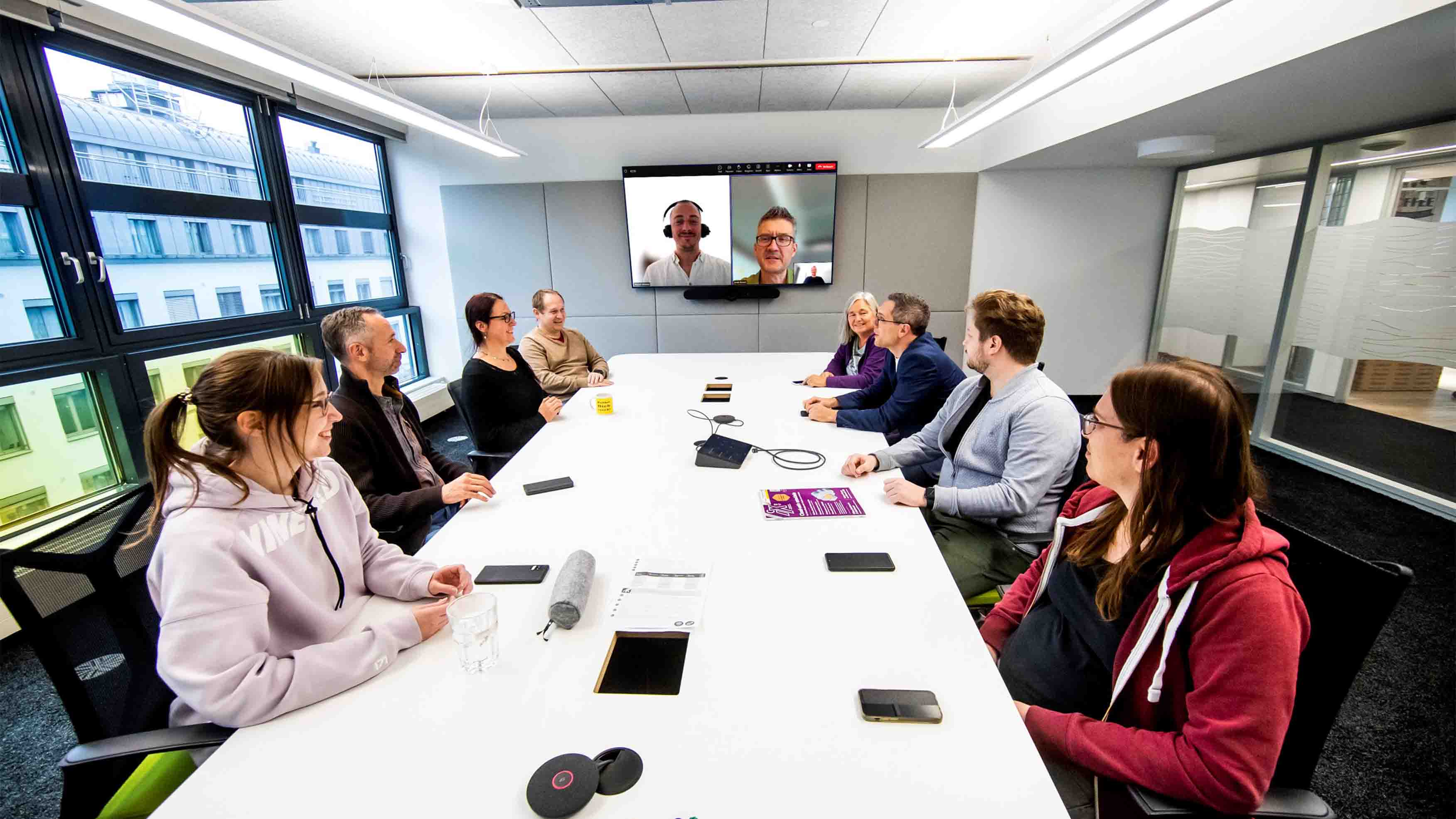
Mobile working from home offices has become standard in recent years thanks to hybrid meeting rooms with excellent technical equipment.